Blog
Your Parking Lot Can Do More: Why Site Owners Are Adding EV Charging
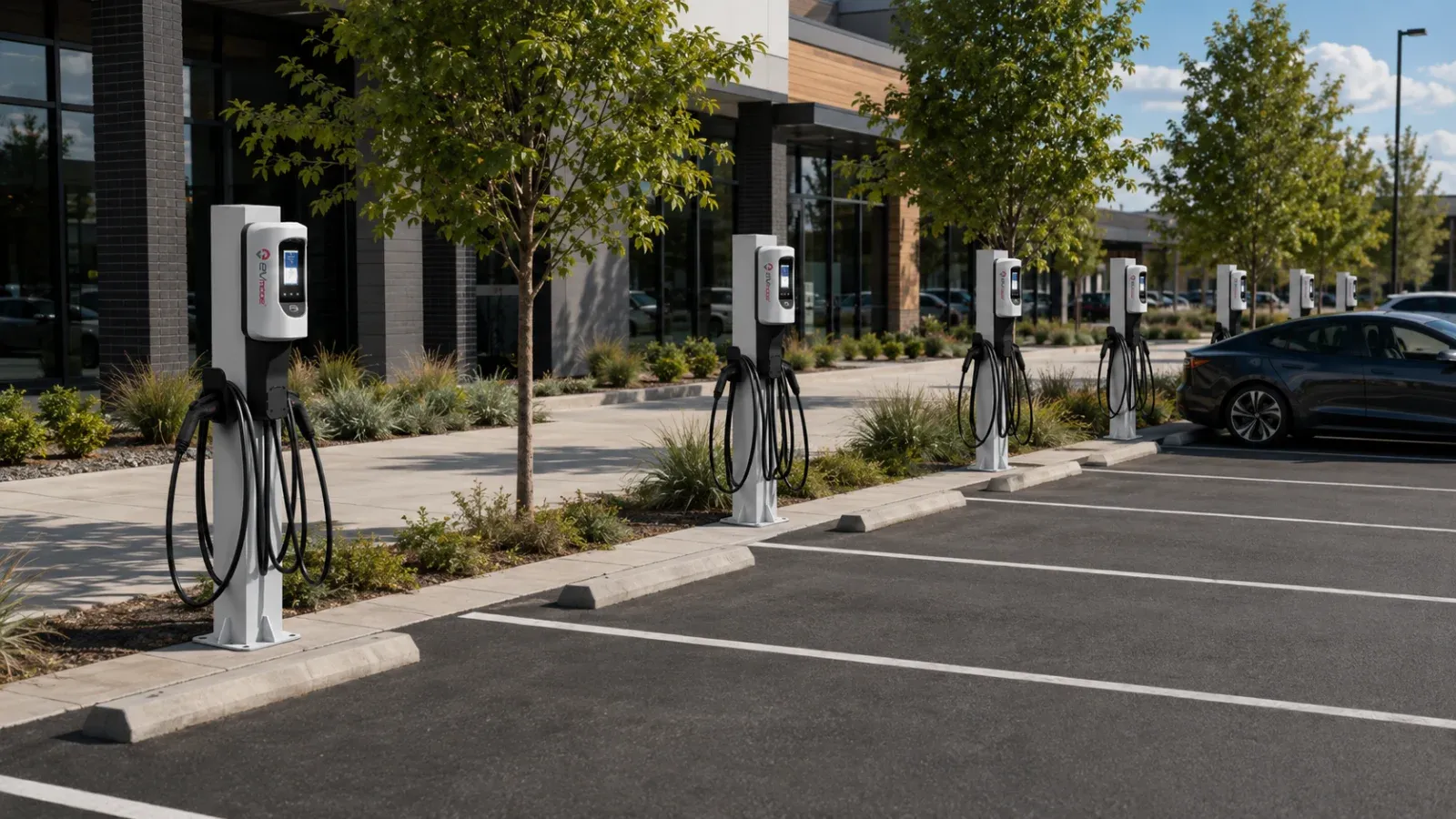
Most businesses think of their parking lot as a cost: paving, lighting, striping, snow removal. For a growing number of site owners, it is becoming something else. Adding EV charging turns a few parking spaces into a reason for drivers to choose your location, stay longer, and come back.
If you own or manage a hotel, office building, apartment community, restaurant, grocery store, medical office, or public parking facility, here is what hosting EV chargers can do for you, what has changed in 2026, and how to get started without taking on a construction project you do not have time for.
Why Drivers Pick Places With Chargers
EV drivers plan their stops around charging. A driver who knows your location has a working charger has one more reason to pick you over the business down the street, and one less reason to leave early.
Oliver Wyman’s 2025 global driver survey, as reported by Driivz in April 2026, found that more than 70% of EV drivers use public charging regularly, and that supermarkets and shopping centers rank among the top two preferred public charging locations for 41% of drivers. The same survey put the average public charging session at about 35 minutes, with roughly half of drivers who stop going into the nearby store or restaurant.
Thirty-five minutes is long enough to order lunch, run errands, or finish a meeting. A gas stop is over in five.
Five Ways Charging Pays Back
| What you get | How it works |
|---|---|
| New visitors | Charging apps put your location on the map for every EV driver nearby |
| Longer visits | Drivers stay for the length of a charge, often 30 minutes to several hours |
| Charging revenue | You or your operator set per-kWh, per-hour, or session pricing |
| Tenant and resident appeal | Charging is fast becoming an expected amenity for renters, office tenants, and hotel guests |
| Employee benefit | Staff can charge during their shift, which helps with hiring and retention |
The right mix depends on your property. A hotel or apartment community may care most about guest and resident satisfaction. A restaurant or retailer may care most about new visits. A parking operator may care most about direct revenue. Charging can serve all three.
Match the Charger to How Long People Stay
The most common mistake is choosing a charger by its power rating instead of by how long visitors actually park.
- Overnight or all day (hotels, apartments, offices, employee parking): Level 2 charging is the right fit. A typical stay is a full charge, and the electrical upgrade is far smaller than for DC.
- One to three hours (restaurants, gyms, medical offices, entertainment): Level 2 still works well, and higher-output units add meaningful range in a single visit.
- Under an hour (convenience stores, quick-service food, highway-adjacent sites): DC fast charging, where a 20- to 40-minute stop adds real range and keeps drivers on a tight schedule happy.
Many properties end up with a mix: a few DC fast chargers near the entrance for quick visits, and a larger bank of Level 2 chargers for longer stays.
What Changed in 2026: Plan Around Local Incentives
Site owners should know about one big change. The federal Alternative Fuel Vehicle Refueling Property Credit (Section 30C), which covered part of the cost of business charging equipment, expired on June 30, 2026, according to the U.S. Department of Energy’s Alternative Fuels Data Center. Chargers placed in service after that date no longer qualify.
That does not mean incentives are gone. Many states and electric utilities still run their own rebate and make-ready programs for commercial charging, and the details vary widely by location. The Alternative Fuels Data Center keeps a searchable list of state laws and incentives, and your local utility is usually the best place to ask about make-ready programs that cover the electrical work. A good charging partner will check what is available for your address before you commit.
Three Ways to Host
You do not have to become a charging expert to host chargers. Most site owners choose one of three approaches:
- Own and operate. You buy the chargers, set the pricing, and keep the charging revenue. Management software handles billing, monitoring, and reporting.
- Amenity first. You offer charging to tenants, residents, guests, or employees, free or at cost, as part of the property’s value.
- Hands-off. You work with a partner that handles design, installation, and day-to-day operation, so your team does not have to manage chargers at all.
The right choice depends on your capital budget, how much control you want over pricing, and who you are trying to attract.
Questions to Ask Before You Install
- How long do visitors and tenants usually park? This decides AC versus DC.
- How much electrical capacity does the site have? A site assessment tells you how many chargers you can add before a service upgrade.
- Who will drivers call if something goes wrong? Reliability is what keeps drivers coming back. A broken charger sends them to a competitor.
- Can you see usage and revenue? You should be able to track sessions, energy, and income for every charger.
- Will the system work with other hardware? Open standards like OCPP keep you from being locked into one vendor.
How EVmode Helps Site Owners
EVmode designs, builds, and operates its own chargers and software, so one partner covers the hardware, the network, and the support.
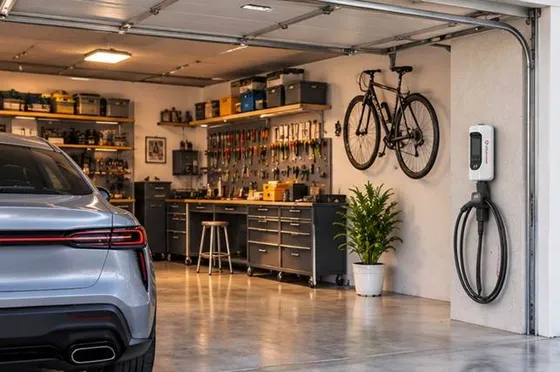
For longer stays, EVmode’s Level 2 Charger delivers 7.7 kW or 12 kW with a 5-inch, 900-nit color display, in wall-mounted or pedestal versions, and it is ENERGY STAR certified. The Premium Dual Level 2 Charger charges two vehicles at once at 7.7 kW each with SAE J1772 or NACS connectors, which makes it a strong fit for parking lots and garages.
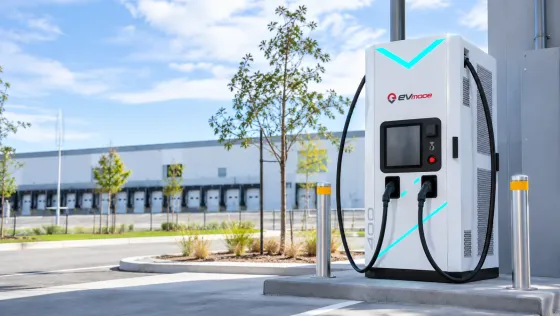
For quick visits, EVmode offers a compact dual-port DC charger at 60 kW or 80 kW for commercial sites, and a modular Level 3 DC Fast Charger at 120, 150, or 180 kW with CCS1 and NACS connectors and dynamic power sharing.
EVmode CSMS gives site owners one view of every charger, with real-time monitoring, flexible pricing, revenue tracking, and usage statistics. Drivers find your chargers, check live availability, and pay through the EVmode Smartphone App. EVmode chargers are designed in the USA, assembled in California, and supported by a team available 24/7 by phone and chat.
The Takeaway
Drivers are already choosing where to shop, eat, stay, and work based on where they can charge. The businesses that add charging now put themselves on that map. The ones that wait may find their customers parked somewhere else.
Thinking about chargers for your property? Talk to EVmode and we’ll help you plan the right setup for your site.
Charge the Future
Sources
- Oliver Wyman 2025 global driver survey, via Driivz, “The Growing Value of Electric Vehicle Drivers for Retailers,” April 2026: https://driivz.com/blog/growing-value-of-ev-drivers-for-retailers-amid-used-ev-boom/
- U.S. Department of Energy, Alternative Fuels Data Center, “Alternative Fuel Infrastructure Tax Credit”: https://afdc.energy.gov/laws/10513
- Kiplinger, “EV Charger Tax Credit: What You Need to Know for 2026 Returns,” May 2026: https://www.kiplinger.com/taxes/605201/federal-tax-credit-for-electric-vehicle-chargers